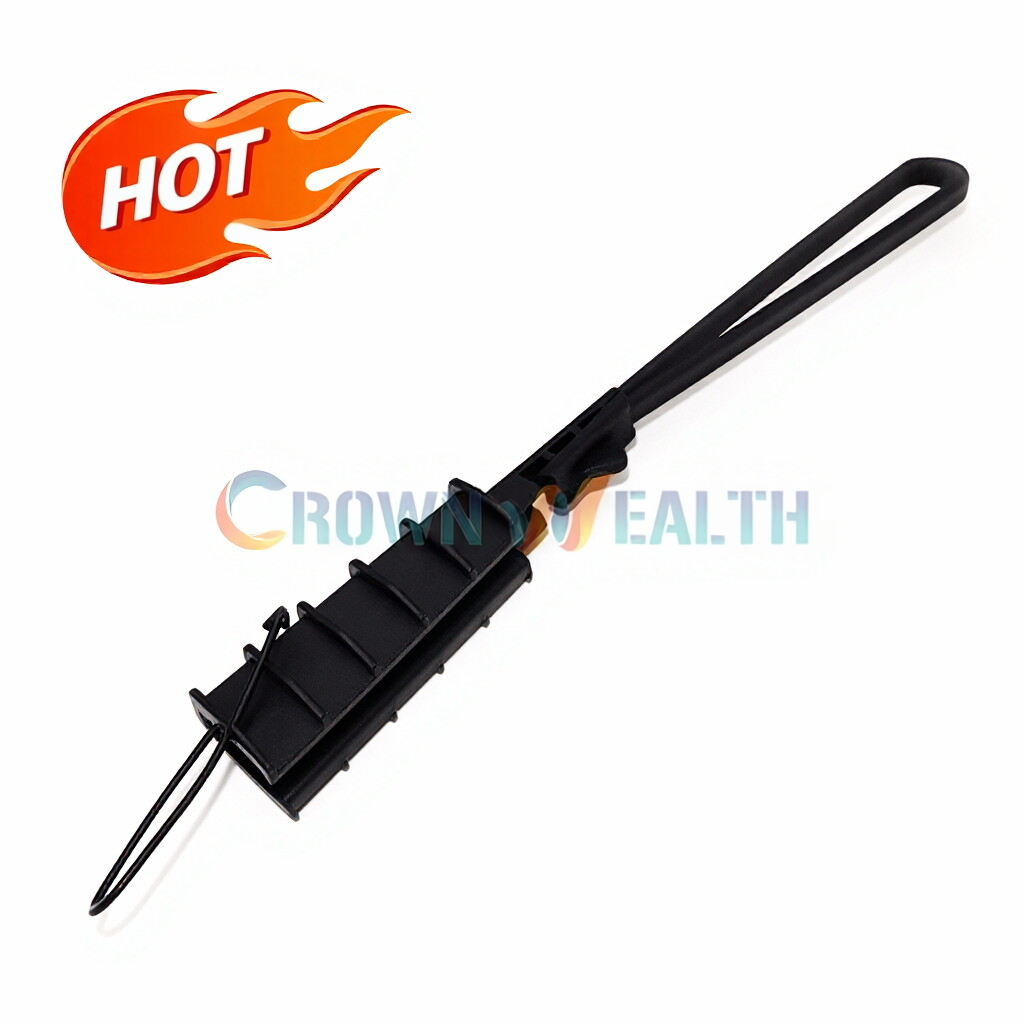
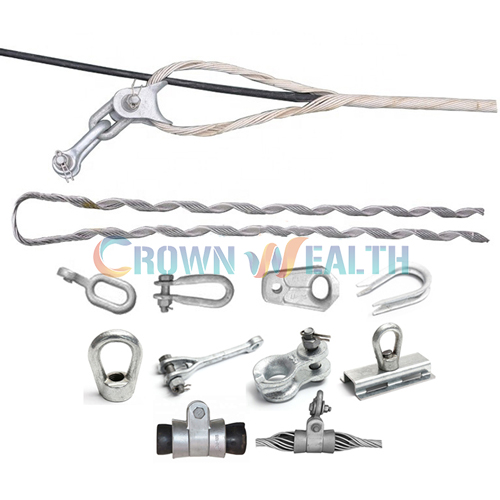
In modern FTTH and telecom networks, the drop wire clamp is an essential hardware component used to secure aerial cables safely and efficiently. It helps maintain proper cable tension, prevents sagging, and protects communication lines from environmental damage. Whether used in fiber optic systems, telephone lines, or overhead cable installations, understanding how to use a drop wire clamp correctly is important for long-term network reliability.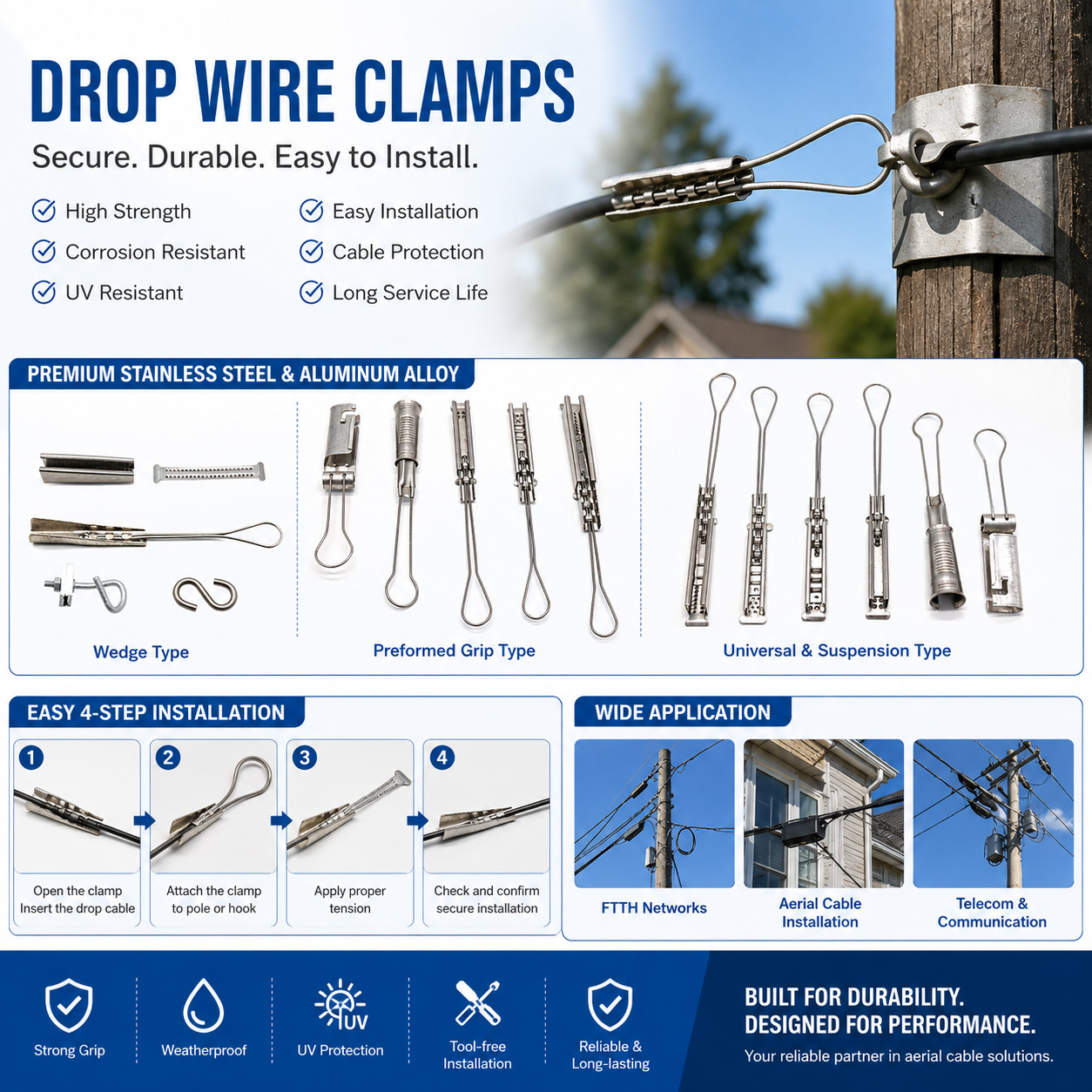
What Is a Drop Wire Clamp?
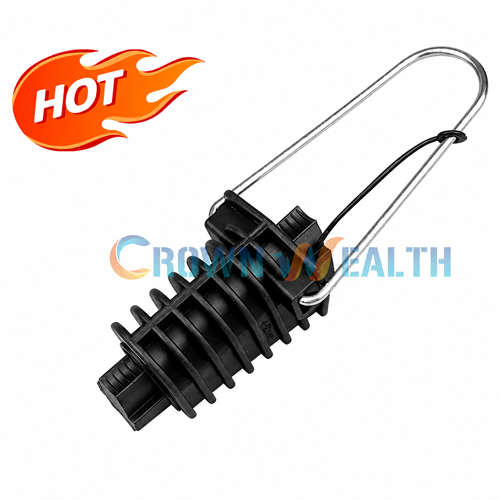
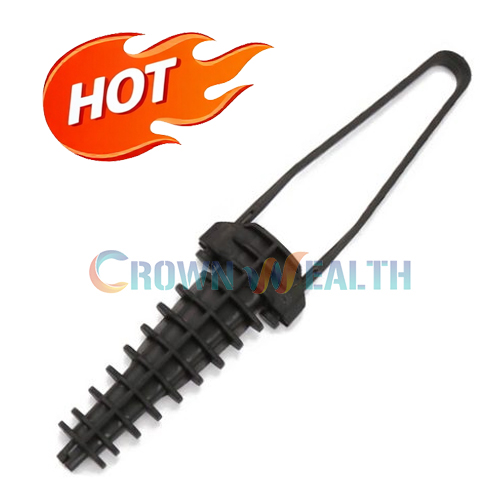
A drop wire clamp is a cable fastening device designed for anchoring aerial drop cables between utility poles and buildings. It is commonly used in:
- FTTH fiber optic networks
- Telecom communication systems
- CATV installations
- Overhead electrical cable projects
The clamp securely grips the cable while protecting the cable sheath from damage during tensioning.
Main Features of Drop Wire Clamps
High-quality drop wire clamps are designed with durable materials and reliable gripping mechanisms. Common features include:
- Stainless steel construction for corrosion resistance
- UV-resistant components for outdoor use
- Strong tension holding capacity
- Easy and tool-free installation
- Long service life in harsh environments
Many telecom contractors choose drop wire clamps for aerial cable projects because they provide stable cable support and reduce maintenance costs.
How to Use a Drop Wire Clamp
Step 1: Prepare the Cable
Before installation, inspect the aerial cable carefully. Make sure:
- The cable is clean and undamaged
- The cable diameter matches the clamp specification
- The installation route is properly planned
Using the correct clamp size ensures secure cable retention and prevents slipping.
Step 2: Open the Clamp
Most drop wire cable clamps use a wedge-type or self-locking mechanism.
- Open or loosen the clamp body
- Create enough space for the cable insertion
- Avoid forcing the cable into the clamp
The internal wedge is designed to grip the cable automatically when tension is applied.
Step 3: Insert the Aerial Cable
Place the cable carefully inside the clamp groove.
Important points:
- Keep the cable straight
- Avoid twisting the cable
- Ensure the cable jacket is not damaged
A proper fit improves gripping performance and extends cable life.
Step 4: Attach the Clamp to the Pole Hardware
Connect the clamp to:
- Pole brackets
- Suspension hooks
- Wall brackets
- Drive hooks
The stainless steel loop or hook should be fixed securely to support the required cable tension.
Step 5: Apply Proper Tension
Gently pull the cable to create the required tension.
A correctly installed aerial drop wire clamp should:
- Prevent cable sagging
- Hold the cable firmly
- Avoid excessive compression on the cable sheath
Overtightening may damage the cable and reduce its service life.
Step 6: Final Inspection
After installation:
- Check that the cable is securely fixed
- Confirm the clamp is fully locked
- Inspect for cable deformation
- Ensure the mounting point is stable
A final inspection helps maintain long-term installation safety.
Advantages of Using Drop Wire Clamps
Reliable Cable Support
Drop wire clamps provide strong gripping force for overhead cable systems, even in windy or harsh outdoor environments.
Easy Installation
Most FTTH drop wire clamps are designed for quick installation without special tools, reducing labor costs and installation time.
Excellent Weather Resistance
High-quality materials offer:
- Corrosion resistance
- UV protection
- Long outdoor durability
This makes them ideal for telecom and fiber optic applications.
Cable Protection
The clamp structure is designed to secure the cable without damaging insulation or fiber cores.
Applications of Drop Wire Clamps
Drop wire clamps are widely used in:
- Fiber optic aerial cable installations
- FTTH network deployment
- Telephone cable systems
- Utility pole communication lines
- Outdoor telecom infrastructure
As global fiber optic networks continue expanding, demand for durable drop wire clamps for aerial cable installation is increasing rapidly.
How to Choose the Right Drop Wire Clamp
When selecting a clamp, consider:
- Cable diameter compatibility
- Material quality
- Corrosion resistance
- Tensile strength
- Installation environment
Professional manufacturers usually provide multiple clamp types for different aerial cable applications.
Why Choose a Professional Drop Wire Clamp Manufacturer?
A reliable supplier can provide:
- Stable product quality
- OEM and customization support
- Strict quality control
- Fast production and delivery
- Technical support for telecom projects
Choosing high-quality products helps improve network safety and reduce maintenance expenses.
Conclusion
Knowing how to use drop wire clamp products correctly is essential for safe and durable aerial cable installation. Proper installation improves cable stability, protects communication lines, and extends the lifespan of telecom networks.
Whether used in FTTH systems, fiber optic projects, or overhead communication lines, high-quality drop wire clamps provide secure tension support, easy installation, and long-lasting outdoor performance.
For telecom contractors and infrastructure suppliers, investing in reliable drop wire clamp solutions is an important step toward building efficient and stable aerial cable networks.