Introduction
A drop wire clamp is an important component used in telecom, fiber optic, and aerial cable systems. It is designed to securely anchor and support drop cables between poles, buildings, and walls while maintaining proper cable tension. Proper drop wire clamp installation helps prevent cable sagging, improves network reliability, and extends the service life of communication systems.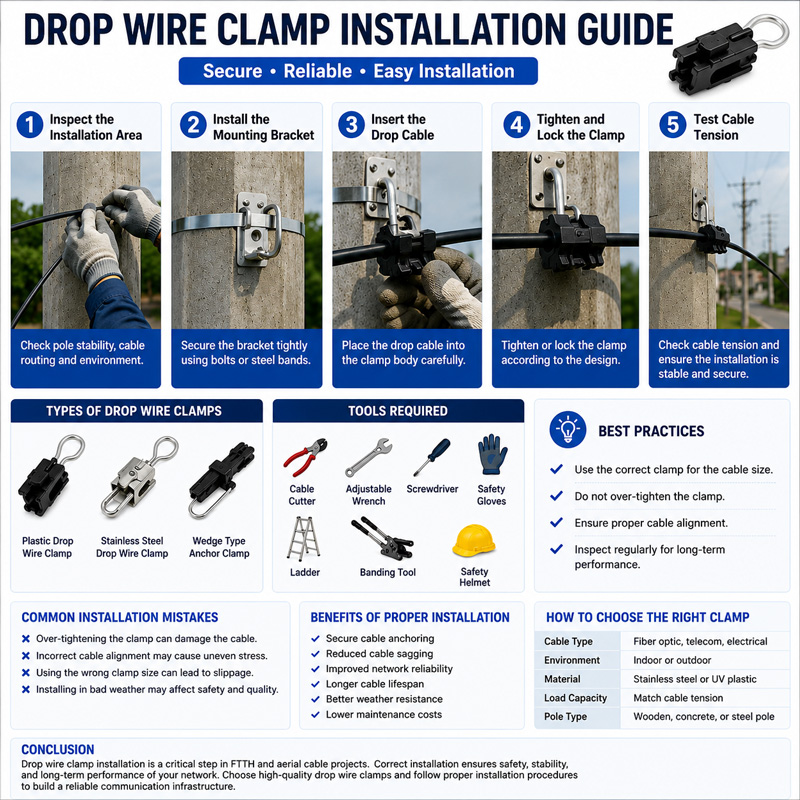
Drop wire clamps are widely used in FTTH (Fiber to the Home) networks, telecom infrastructure, utility pole installations, and outdoor communication projects.
What Is a Drop Wire Clamp?
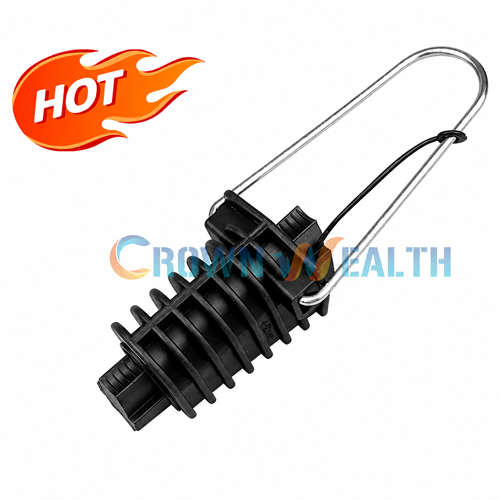
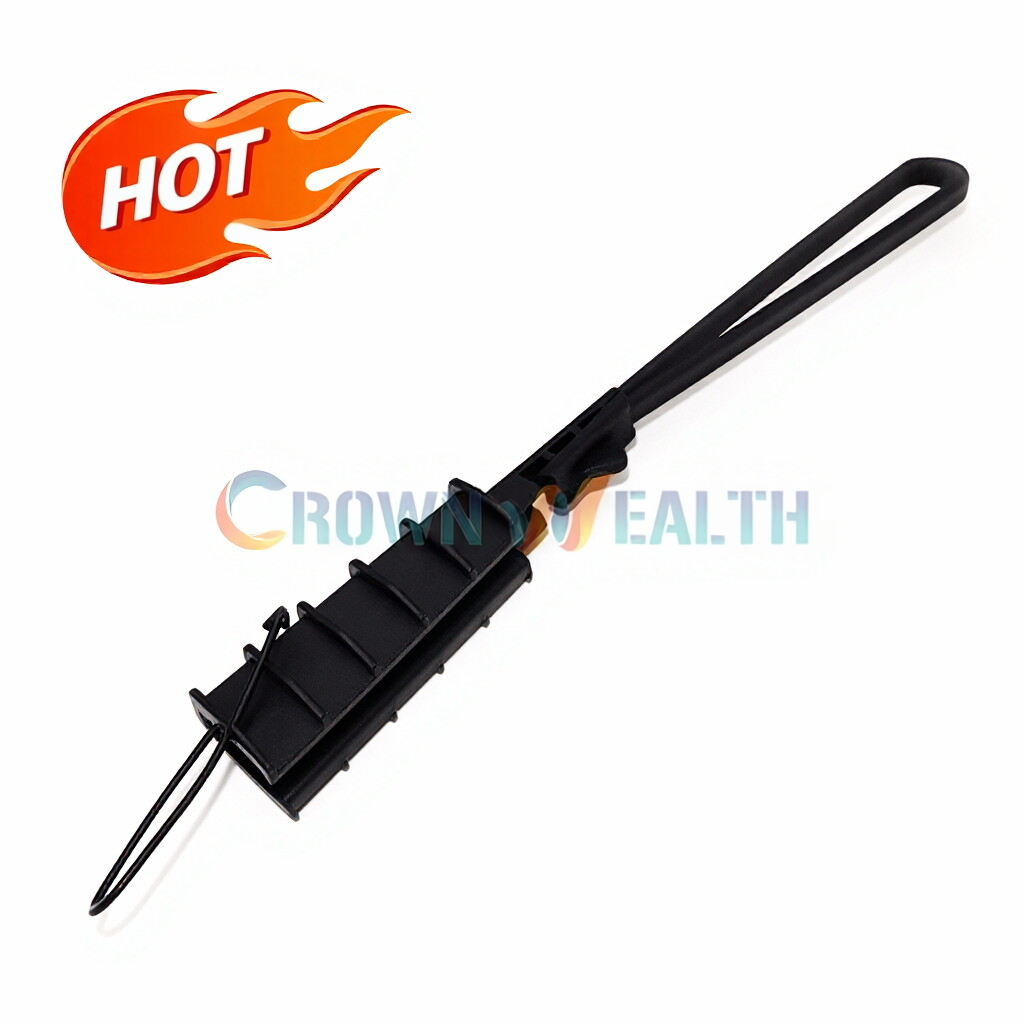
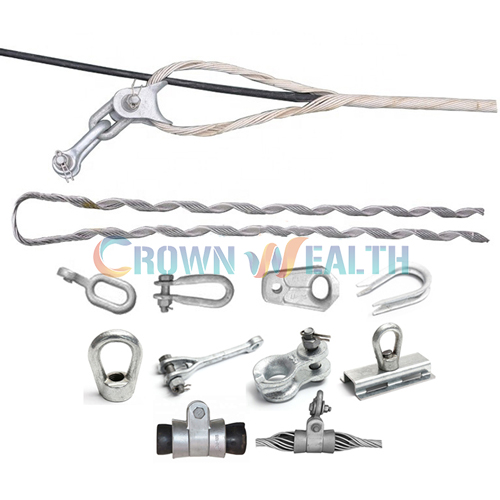
A drop wire clamp is a cable anchoring device used to fix aerial drop cables securely in outdoor installations. These clamps are manufactured from durable materials such as stainless steel, galvanized steel, aluminum alloy, or UV-resistant plastic.
The main functions of a drop wire clamp include:
- Securing aerial drop cables
- Maintaining proper cable tension
- Preventing cable movement
- Reducing cable sagging
- Protecting cables from environmental stress
Drop wire clamps are commonly installed on wooden poles, concrete poles, steel poles, and building walls.
Types of Drop Wire Clamps
Plastic Drop Wire Clamp
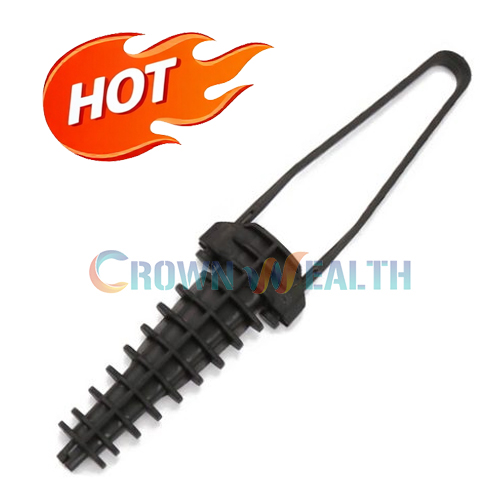
Plastic drop wire clamps are lightweight and corrosion-resistant. They are commonly used for FTTH fiber optic cable installations.
Features
- UV-resistant material
- Easy installation
- Lightweight structure
- Suitable for light-duty applications
Stainless Steel Drop Wire Clamp
Stainless steel drop wire clamps provide excellent strength and long-term durability in outdoor environments.
Features
- High tensile strength
- Corrosion resistance
- Long service life
- Suitable for harsh weather conditions
Wedge Type Anchor Clamp
Wedge type anchor clamps automatically grip the cable when tension is applied.
Features
- Self-adjusting grip
- Reliable cable holding force
- Quick installation
- Commonly used in FTTH systems
Tools Required for Drop Wire Clamp Installation
Before installation, prepare the following tools:
- Cable cutter
- Adjustable wrench
- Screwdriver
- Safety gloves
- Ladder or lifting equipment
- Stainless steel banding tool
- Safety helmet
Using the correct tools ensures safe and efficient installation.
Step-by-Step Drop Wire Clamp Installation
Step 1: Inspect the Installation Area
Before installation:
- Check the condition of the utility pole or wall
- Verify the cable route
- Ensure there is enough clearance
- Confirm weather conditions are safe for installation
A proper inspection helps avoid installation problems and improves long-term stability.
Step 2: Install the Mounting Bracket
Secure the mounting bracket or hook to the pole or wall using bolts or stainless steel bands.
Important Installation Tips
- Tighten all fasteners securely
- Ensure the bracket faces the cable direction
- Avoid loose or unstable mounting points
A strong mounting bracket is essential for reliable cable support.
Step 3: Insert the Drop Cable
Carefully place the drop cable into the clamp body.
Best Practices
- Avoid over-bending the cable
- Protect the cable insulation
- Ensure proper cable alignment
For fiber optic cables, maintain the recommended bending radius to prevent signal loss.
Step 4: Tighten and Lock the Clamp
Secure the clamp according to its design.
Different Locking Methods
- Wedge clamp: pull the cable to activate the grip
- Bolt clamp: tighten screws evenly
- Hook clamp: lock securely onto the bracket
After installation, verify that the cable cannot slip under tension.
Step 5: Test Cable Tension
After installation:
- Check cable alignment
- Verify proper cable tension
- Ensure the clamp is firmly fixed
- Confirm there is no cable deformation
Correct cable tension helps reduce sagging and improves system lifespan.
Common Installation Mistakes
Over-Tightening the Clamp
Excessive tightening may damage the cable sheath or internal fiber.
Incorrect Cable Alignment
Improper alignment creates uneven stress and may shorten cable life.
Using the Wrong Clamp Size
Always select a clamp that matches the cable diameter and tensile load.
Poor Weather Installation
Avoid installation during heavy rain, storms, or strong winds.
Best Practices for Long-Term Performance
Choose High-Quality Materials
Use stainless steel or UV-resistant materials for outdoor applications.
Perform Regular Inspection
Inspect drop wire clamps periodically for:
- Corrosion
- Loose fittings
- Cable wear
- Structural damage
Follow Manufacturer Recommendations
Always follow the recommended cable diameter and tension specifications.
Benefits of Proper Drop Wire Clamp Installation
Proper installation provides several advantages:
- Improved cable stability
- Reduced cable sagging
- Better network reliability
- Longer cable service life
- Strong weather resistance
- Lower maintenance costs
For telecom and FTTH projects, correct installation is essential for safe and stable network operation.
How to Choose the Right Drop Wire Clamp
When selecting a drop wire clamp, consider the following factors:
| Factor | Recommendation |
|---|---|
| Cable Type | Fiber optic, telecom, or electrical cable |
| Installation Environment | Indoor or outdoor |
| Material | Stainless steel or UV-resistant plastic |
| Load Capacity | Match cable tension requirements |
| Pole Type | Wooden, steel, or concrete pole |
Choosing the correct clamp improves installation efficiency and long-term reliability.
Conclusion
Drop wire clamp installation plays a critical role in aerial cable and fiber optic network systems. Proper installation techniques help maintain cable tension, reduce sagging, improve safety, and extend the lifespan of communication infrastructure.
Whether using plastic FTTH clamps or heavy-duty stainless steel anchor clamps, following the correct installation process ensures reliable and long-lasting performance.
For professional telecom and fiber optic projects, investing in high-quality drop wire clamps and proper installation methods is essential for building a secure and efficient network system.